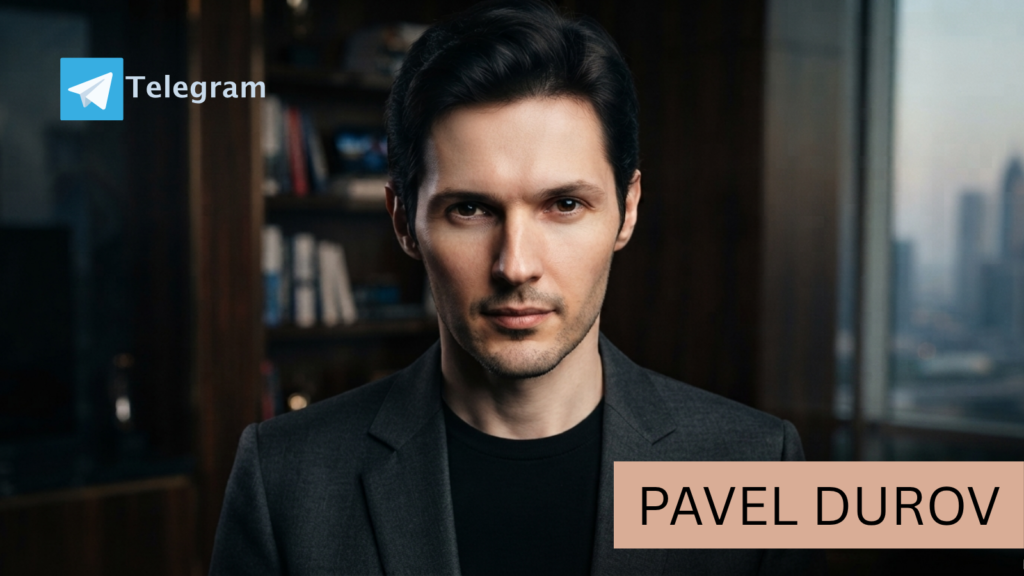
MOSCOW — Russia’s Federal Security Service (FSB) has formally indicted Telegram founder and CEO Pavel Durov on charges of aiding terrorist activities and placed him on an international wanted list, officials announced Wednesday. The move represents a significant escalation in the Kremlin’s long-term campaign to bring the internet under state control, a process that has intensified since the 2022 invasion of Ukraine.
📈 Track real-time charts and professional market indicators with the world's leading charting platform.
Open Free TradingView Account →Disclaimer: We may earn a commission if you sign up through our link at no extra cost to you.
If convicted under Article 205.1 of the Russian Criminal Code, which pertains to assisting terrorist activities, the tech entrepreneur faces a potential life sentence.
Allegations of Sabotage and Recruitment
The FSB accused Telegram’s administration of systematically failing to remove “numerous channels, chats and bots” allegedly used by Ukrainian intelligence and extremist groups to coordinate sabotage, acts of terror, and cyberfraud. Authorities claim these activities have resulted in significant casualties and billions of rubles in economic losses.
A central component of the investigation involves the Telegram-based dating bot DaVinchik (also known as Leo). Investigators allege that Ukrainian intelligence used the service to recruit Russian citizens—including at least 19 teenagers—to carry out arson attacks on administrative buildings and assaults on law enforcement. Since July 2025, 46 users of the bot have been detained across multiple Russian regions.
Durov’s Defense and Legal History
Durov, a dual citizen of France and the UAE currently based in Dubai, has characterized the investigations as “fabricated pretexts” intended to suppress the right to privacy and free speech. Following the FSB’s announcement, Telegram’s official account on X published a photo of Durov without an accompanying statement.
This indictment follows a 2024 arrest in Paris, where French authorities handed Durov preliminary charges for allegedly allowing drug trafficking and the distribution of child sexual abuse images on the platform. At that time, the Kremlin criticized the French move as “selective”.
Internal Friction: Military Necessity vs. State Control
The crackdown has exposed a rift between the government’s security goals and the practical needs of its military. Pro-war military bloggers have lambasted the restrictions, describing Telegram as an “indispensable” tool for frontline communication and crowdfunding for Moscow’s forces.
While the government initially promised not to restrict the app on the battlefield, President Vladimir Putin recently signaled a shift. During a meeting with a servicewoman who labeled the app an “adversarial tool,” Putin agreed that using communication systems not under state control poses a direct danger to personnel.
The Push for ‘MAX’
As authorities tighten restrictions on Telegram, the state is actively promoting “MAX,” a national messaging alternative. Although marketed as a “one-stop shop” for government services and payments, cybersecurity experts warn the app lacks end-to-end encryption and openly declares its intent to share user data with authorities upon request.
Despite the new charges, presidential spokesman Dmitry Peskov noted that while negotiations over Telegram’s operations continue, the company’s representatives have shown “little engagement” in the process.
Editorial Note: This article was researched and drafted with AI assistance, then rigorously fact-checked, edited, and published by Miles. All content is strictly for informational and educational purposes only and does not constitute professional investment advice. Cryptocurrency and global financial markets experience severe volatility, sometimes swinging 50% or more in a single day. Invest only capital you can comfortably afford to lose, and always consult a certified financial advisor before committing funds. Read my full Disclaimer for more details.
Ready to Start Trading Cryptocurrency?
Open your account at a trusted exchange and begin trading today:
Sponsored & Disclosure: This box contains affiliate links. We earn a commission when you sign up through these links at no extra cost to you.