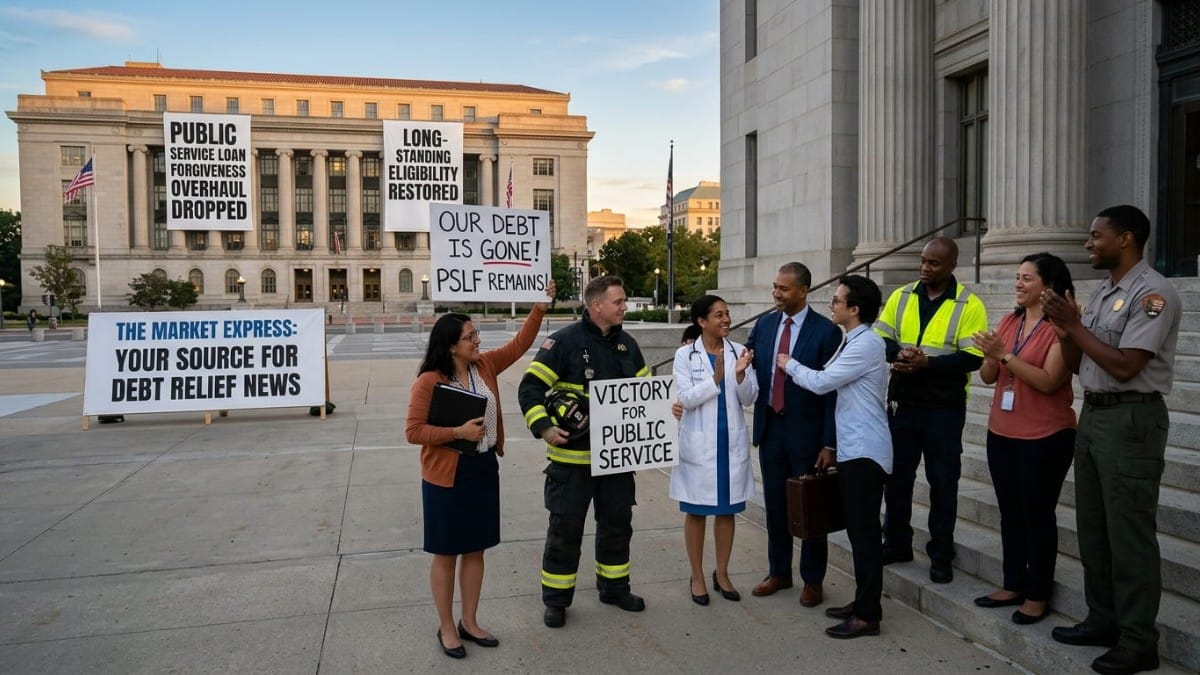
In a major legal resolution for American student borrowers, the Trump administration has officially abandoned its legal efforts to alter Public Service Loan Forgiveness (PSLF) guidelines. Federal attorneys representing the Department of Education submitted formal requests to drop pending appellate cases, effectively cementing prior judicial decisions that protected existing debt cancellation pathways.
The abrupt withdrawal of government appeals across circuit courts ensures that long-standing eligibility criteria for loan forgiveness remain unchanged. For millions of non-profit employees, public sector workers, and civil servants, the resolution delivers much-needed stability to nationwide loan discharge programs.
Understanding the Legal Turn: Why the Trump Administration Dropped the Appeal
The decision marks an abrupt halt to executive branch plans that sought to redesign qualifying criteria for federal student debt relief. Legal observers note that the Department of Justice likely anticipated further setbacks in higher courts following strong rulings issued by federal district judges last June.
“This outcome represents a significant triumph for individuals across the country who have committed their careers to community service,” stated Dan Zibel, Chief Counsel at Student Defense. “Upon reviewing the lower court decisions, government attorneys likely realized that appellate courts would ultimately sustain the original rulings.”
By voluntarily dismissing the appeals, the administration leaves previous court rulings fully enforceable nationwide.
Core Restrictions Voided Under the Overhaul Proposal
First introduced in mid-2025, the proposed policy adjustments intended to provide federal education administrators sweeping oversight to inspect and filter eligible employers. Had the overhaul proceeded, administrative leadership could have restricted certain organizations from participating in the program based on compliance criteria surrounding public activities.
Specific clauses targeted non-profit institutions associated with contentious policy issues, immigration enforcement challenges, or constitutional demonstrations. However, federal courts ultimately determined that expanding administrative oversight in this manner exceeded statutory boundaries set by Congress and infringed upon constitutional speech rights.
Court Rulings Safeguard Debt Forgiveness Guidelines
Coordinated legal actions brought by municipal governments—including administrative bodies from Boston, Chicago, and Albuquerque—alongside non-profit coalitions successfully halted the policy implementation prior to its effective date.
Key Judicial Outcomes Include:
- Massachusetts District Court Ruling: U.S. District Judge Myong Joun invalidated the measure, citing administrative overreach beyond congressional statutory authorization.
- D.C. District Court Decision: U.S. District Judge Amir Ali issued a companion order vacating the framework in response to challenges from civil rights and public interest organizations.
Long-Term Outlook for Student Borrowers and Non-Profits
The resolution confirms that public sector employees can continue participating in the debt cancellation framework without procedural disruptions. Under federal law, eligible full-time workers in public health, emergency services, public education, and 501(c)(3) tax-exempt charities remain eligible for complete debt relief after completing 120 qualifying payments.
“Public sector workers can now operate with total assurance that the debt relief guaranteed through dedicated service will remain accessible,” emphasized Diane Yentel, President and CEO of the National Council of Nonprofits.
Since its inception, the federal government has fulfilled debt relief obligations for over 700,000 public servants, maintaining an essential financial foundation for public benefit professions nationwide.
For comprehensive coverage on global financial shifts, federal policy developments, and macroeconomic trends, visit The Market Express Economy Hub.