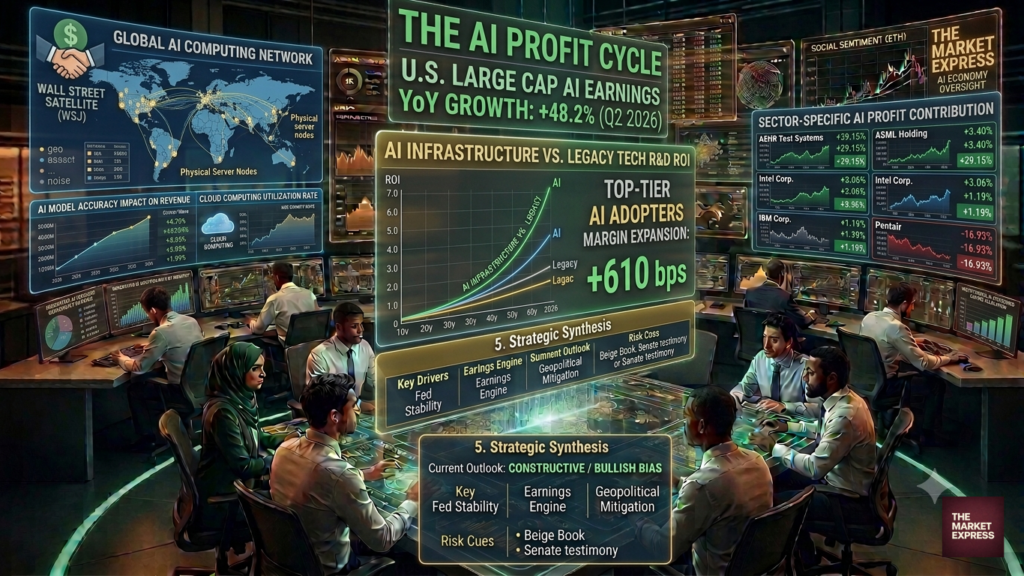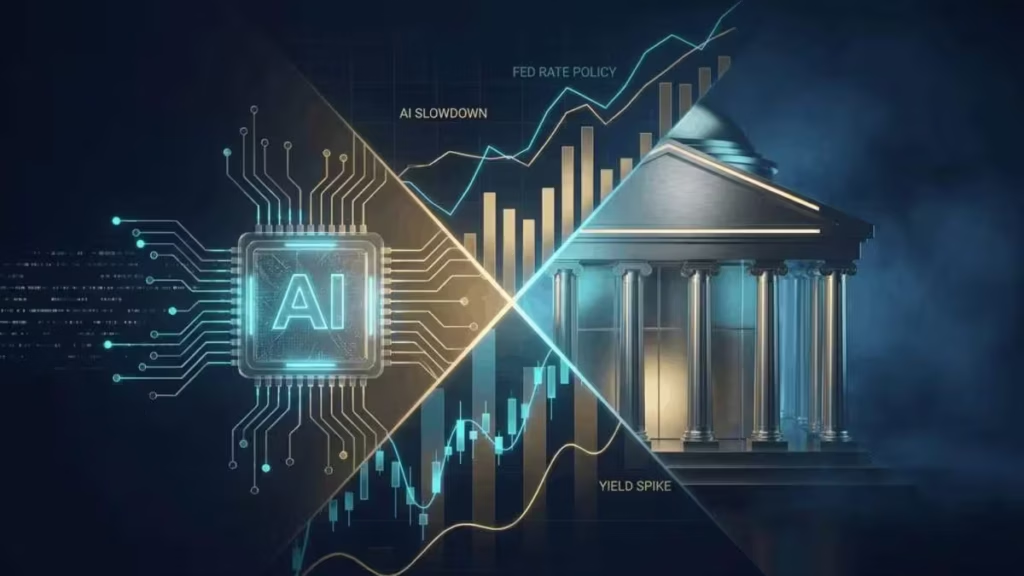
Wall Street investors are dealing with a tough market situation as they face uncertainty about the Federal Reserve’s interest rate plans and worries about a slowdown in artificial intelligence. The Fed raised interest rates for the first time in three years to bring down inflation, which is still above the target. Even though most money markets expected this move, equity traders are still nervous about how many more rate hikes might happen. Higher borrowing costs are making government bond yields go up sharply across different parts of the yield curve. At the same time, conflicts in the Middle East are causing oil prices to climb towards important levels. Investors are trying to figure out if major stock indexes can keep rising and set new records despite these challenges.
High Treasury yields and rising oil prices are making it harder for stock prices to grow. The 10-year Treasury yield recently hit 4.996%, and the 30-year yield went up to 5.327%. Oil prices are also up, with Brent crude at $103.19 per barrel and WTI at $96.08. Market experts say that staying below 5% yields and $100 per barrel for oil is important for investors to feel comfortable and continue investing. Art Hogan, a market strategist at B. Riley Wealth, said that when these levels are crossed, stock markets face big challenges.
The CBOE Volatility Index is at 14.81, showing that there’s still a lot of uncertainty. Despite tightening monetary conditions, benchmark stock indexes continue to demonstrate solid resilience. The flagship S&P 500 has climbed past an 11% gain this year, hovering just below its historic peak, while the Dow Jones stands at 51,682.64 and the Nasdaq holds at 26,522.55. Higher rates make it more expensive for companies to borrow money and slow down the economy. However, the recent rate hike tested the new Federal Reserve Chair, Kevin Warsh. Appointed by Trump, he faced pressure to cut rates, but he chose to raise them, showing the Fed’s independence.
Joe Mazzola, a strategist at Charles Schwab, said the Fed has cleared a big hurdle. Now, the focus is on when the Fed will raise rates again. Fed funds futures suggest about a 50% chance of another rate hike in October. This is just before the U.S. midterm elections, so many Fed officials will speak next week. Investors are listening for clues about future rate decisions, especially since Chair Warsh hasn’t given much guidance.
Economic data next week, including manufacturing, services, and consumer confidence, will show if inflation is under control. Geopolitical events, like a visit by Chinese President Xi Jinping to the U.S. and a meeting with Trump, are important. Agenda items will feature discussions on artificial intelligence, semiconductor shipments, and cross-border tech commerce. Technology equities represent a dominant force within the S&P 500, accounting for 38% of the index’s overall weighting. Although tech shares enjoyed a stellar run earlier, momentum has flattened since June, with key industry leaders like Nvidia, Apple, Microsoft, Meta, and Amazon trading with mixed performances.
There’s also concern about AI risks, with some leaders warning about safety and the development of AI models. This is affecting tech supply chains and putting some pressure on semiconductor companies. Memory and storage chip makers like Micron and SanDisk are moving differently, while tech companies face more scrutiny. Investors are looking for clear signs before changing long-term spending plans on AI. Even though there’s some regulation, many investors think it won’t stop AI development.
As Wall Street deals with changing rates, global tensions, and tech trends, portfolio managers need to manage different risks. The decisions of the Fed, oil supply, and where AI spending goes will determine if stock indexes go higher or stay the same. Higher borrowing costs hurt non-tech companies, but investment in AI infrastructure is still a key part of stock valuations. Investors are watching economic data and company statements to see if earnings growth can beat rising bond yields. For now, stock markets are near all-time highs, waiting for clear answers on interest rates and trade agreements.
Editorial Note: This article was researched and drafted with AI assistance, then rigorously fact-checked, edited, and published by Miles. All content is strictly for informational and educational purposes only and does not constitute professional investment advice. Cryptocurrency and global financial markets experience severe volatility, sometimes swinging 50% or more in a single day. Invest only capital you can comfortably afford to lose, and always consult a certified financial advisor before committing funds. Read my full Disclaimer for more details.
Ready to Start Trading Cryptocurrency?
Open your account at a trusted exchange and begin trading today:
Sponsored & Disclosure: This box contains affiliate links. We earn a commission when you sign up through these links at no extra cost to you.