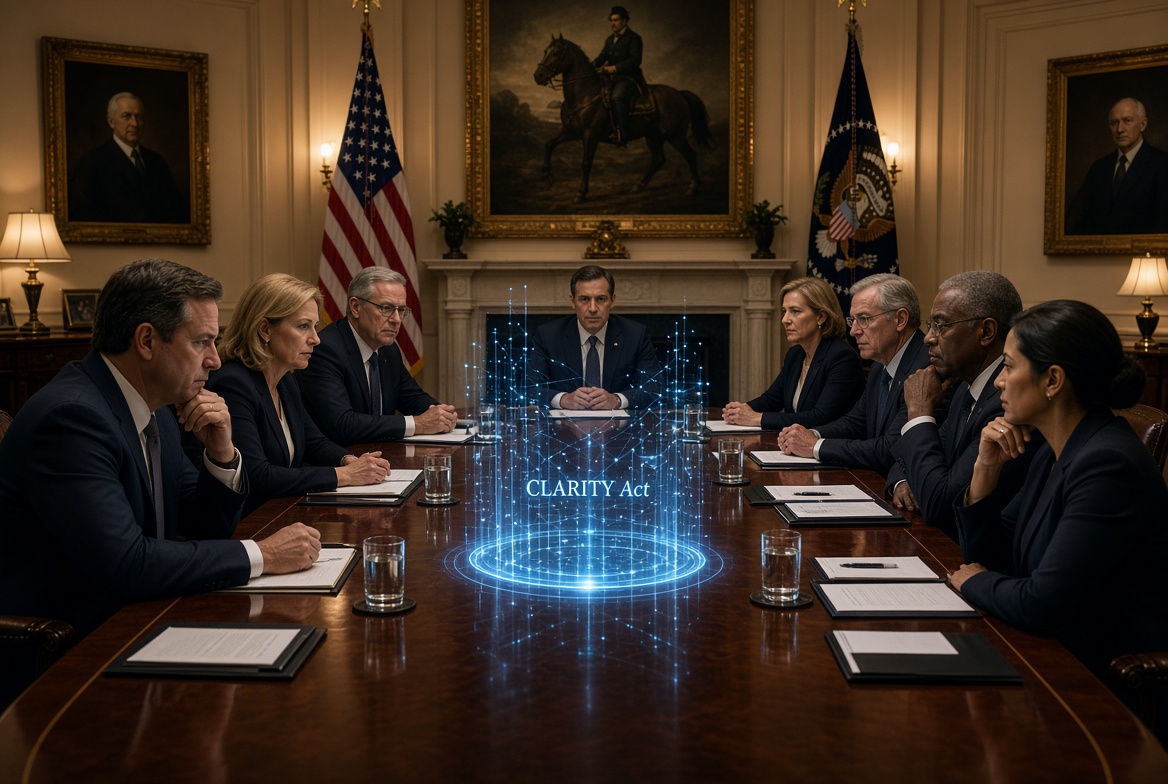
The CLARITY Act September vote faces severe setback risks if lawmakers rush the process. Deep partisan disagreements over ethics rules and stablecoin yields remain unresolved. Senator Ruben Gallego warned at the SALT Wyoming Blockchain Symposium against forcing the digital asset legislation forward. He noted that premature movement threatens to derail the broader digital asset legislative package. These warnings come even as President Donald Trump increases public pressure on Congress. Trump urged lawmakers to pass a “fair version” to keep the nation ahead of China.
The legislative deadlock comes amid an explosive surge in cryptocurrency markets. Bitcoin rallied 5.2% to trade at $71,880 following Trump’s White House meeting on August 19, 2026. Meanwhile, Ether surged more than 9% to $2,288.91. This market rally was further accelerated by a major U.S. Treasury announcement. The Treasury will double its buybacks of 20-year and 30-year government bonds. This move lowers yields and drives capital into higher-risk digital assets. Geoffrey Kendrick, global head of digital assets research at Standard Chartered, noted the positive market alignment. He advised investors to position for a move to $100,000 by the end of 2026.
Yet, the momentum behind the CLARITY Act September vote could stall in the Senate. Senate Majority Leader John Thune postponed the vote until lawmakers return from recess on September 15. The proposed bill aims to set up an all-inclusive national regulatory structure for the industry. It divides oversight responsibilities between the Securities and Exchange Commission and the Commodity Futures Trading Commission. Proponents argue the bill will secure industry rules for decades. “This initiative ensures that the regulatory groundwork established by the current administration remains resilient and impactful for generations to come,” remarked Coinbase CEO Brian Armstrong. Coinbase also asserted that passing the law would help the United States win the global crypto race.
However, deep disagreements over ethics restrictions and stablecoin yield limits remain major obstacles. Securing the necessary 60 Senate votes will require significant compromises. Gallego and Republican Senator Thom Tillis submitted compromise ethics language restricting current officials from participating in cryptocurrency projects. They sent this to the White House before recess, but the administration provided no substantive response. These ethical provisions are a critical sticking point for Senate Democrats. Many express concerns over potential presidential conflicts of interest. Critics highlight that President Trump disclosed earning nearly $1.2 billion from crypto ventures in 2025. This includes $526 million from the World Liberty Financial venture he co-founded with his family. He also took in more than $600 million from CIC Digital LLC through sales of souvenir coins. “Certainly, the way he’s going about it, which he creates policies that can only enrich himself and his family, is something that I think the average American should be staggered by,” said Ty Cobb, former Special Counsel at the Trump White House. Gallego insisted that Congress, rather than the president, must set the parameters for these ethical restrictions.
Meanwhile, stablecoin yield disputes continue to divide the traditional banking sector and the cryptocurrency industry. Traditional U.S. banks are lobbying the Senate to close loopholes on stablecoin reward programs. They argue these rewards economically resemble interest-bearing bank deposits. This threatens their traditional deposit model. Conversely, cryptocurrency companies argue that such barriers are protectionist measures designed to suppress innovation. The Commodity Futures Trading Commission is moving forward with its own plans. It scheduled an inaugural meeting of an innovation advisory committee to detail its regulatory approach. “Innovation depends on regulatory clarity,” said Michael Selig, Chairman of the Commodity Futures Trading Commission. In tandem, the SEC has proposed a new Crypto Assets Rule. This rule allows entrepreneurs to raise capital with digital assets. SEC Chairman Paul Atkins described this action as consonant with sending the completed bill to the president. Still, Gallego cautions that pushing for an immediate vote before these committee details are finalized is a mistake. “A quick vote yields a quick result, but I’m not sure that’s what you want,” said Ruben Gallego, Arizona Senator. Without a steady, bipartisan resolution on these core disputes, the long-awaited CLARITY Act September vote could face severe setbacks.
Editorial Note: This article was researched and drafted with the assistance of AI tools, then thoroughly fact-checked and edited by our editorial team before publication. Content is for informational purposes only and is not investment advice. Cryptocurrency and financial markets experience severe volatility, sometimes 50% or more in a single day. Invest only money you can afford to lose completely. Always consult a qualified financial advisor before investing. See our Disclaimer for details.