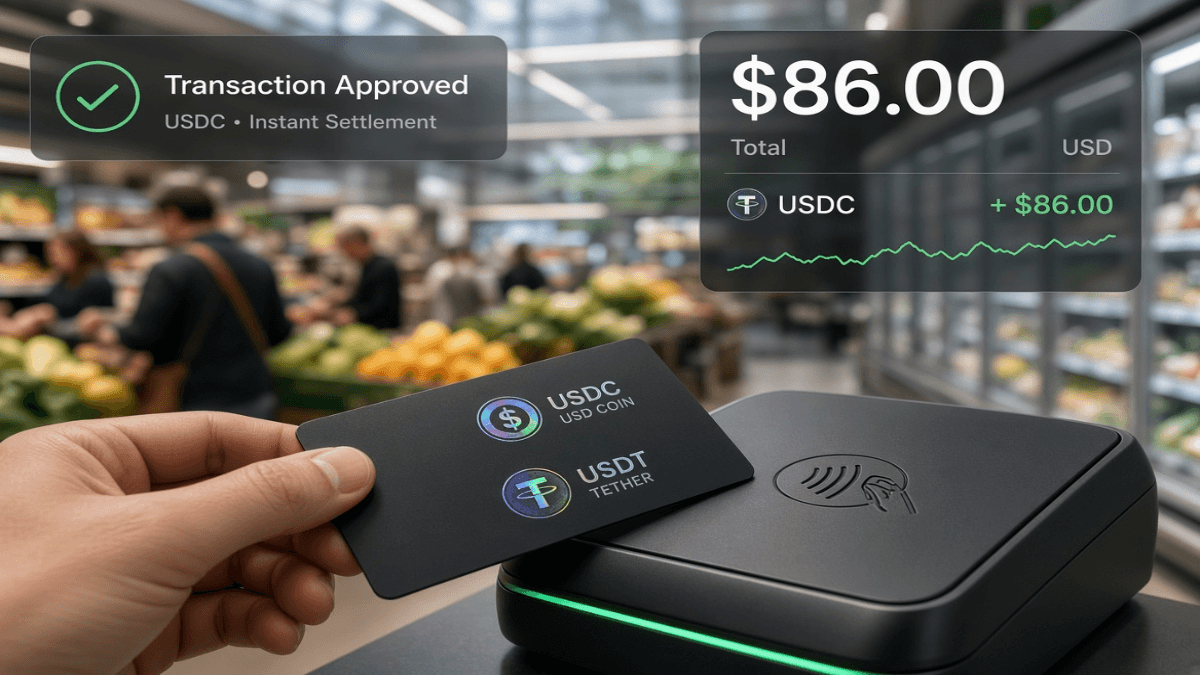
Crypto card spending surged to a record $759 million in July 2026, marking a massive 2.5-fold increase from the $306 million recorded just one year earlier. This aggressive growth trajectory signals a fundamental shift in how digital assets interact with the global economy. Consumers completed nearly 9 million individual purchases during the month, up from 5.2 million in July 2025. These figures represent the fifth consecutive month of volume gains for the sector. The average transaction size now sits at approximately $86.00. This specific price point suggests that users are moving away from speculative trading toward routine retail utility. “The $86 average is the real story: this is groceries, dinners, and taxis, not whales moving size,” said Quinn Dao, Author at Fizen.
Dollar-pegged stablecoins provided the primary fuel for this expansion, capturing 84% of total tracked volume. USDC maintained its market lead by facilitating 58% of all card-based settlements. Meanwhile, USDT emerged as the fastest-growing asset in the category, with its share climbing from 7% to 26% over the last 12 months. This realignment has come at the expense of euro-denominated tokens like EURe. EURe’s volume collapsed from an 88% dominance in early 2024 to a mere 2% by July 2026. Most of this activity now flows through the Visa network, which currently supports over 130 stablecoin-linked card programs across 50 countries. “Our role is not to pick winners,” stated Ryan McInerney, CEO at Visa, during a recent earnings call detailing the company’s “multi-coin, multi-chain” strategy.
The underlying blockchain infrastructure is also undergoing a rapid diversification. Optimism led all settlement networks in July by processing 29% of tracked spending. Solana and Base followed closely, each securing approximately 19% of the market share. This represents a significant departure from early 2024, when Gnosis handled the vast majority of self-custodial card activity. Gnosis’s share has since dwindled to 2% as new issuers enter the space. “Purchase counts have been tracking the growth in monthly card volume,” noted analysts at a16z Crypto regarding the sector’s improving real-world throughput. RedotPay currently stands as the highest-volume issuer among tracked programs, though its data relies on self-reported figures rather than direct on-chain observation.
Regulatory tailwinds in the United States have further stabilized the market for dollar-backed assets. The GENIUS Act, signed into law in July 2025, established the first federal standards for payment stablecoin issuers. These rules dictate strict requirements for reserves, redemption procedures, and federal supervision. The Office of the Comptroller of the Currency proposed additional implementation rules in February 2026 to ensure capital treatment and liquidity oversight. Still, crypto card spending remains a small fraction of the trillions processed monthly by traditional payment networks. Yet the rapid jump from under $1 million in monthly volume in October 2023 to over $750 million today demonstrates an accelerating adoption curve. Most users now opt for custodial card programs in which the issuer manages stablecoin balances, though self-custodial models continue to gain traction through providers such as Gnosis and Fizen.