
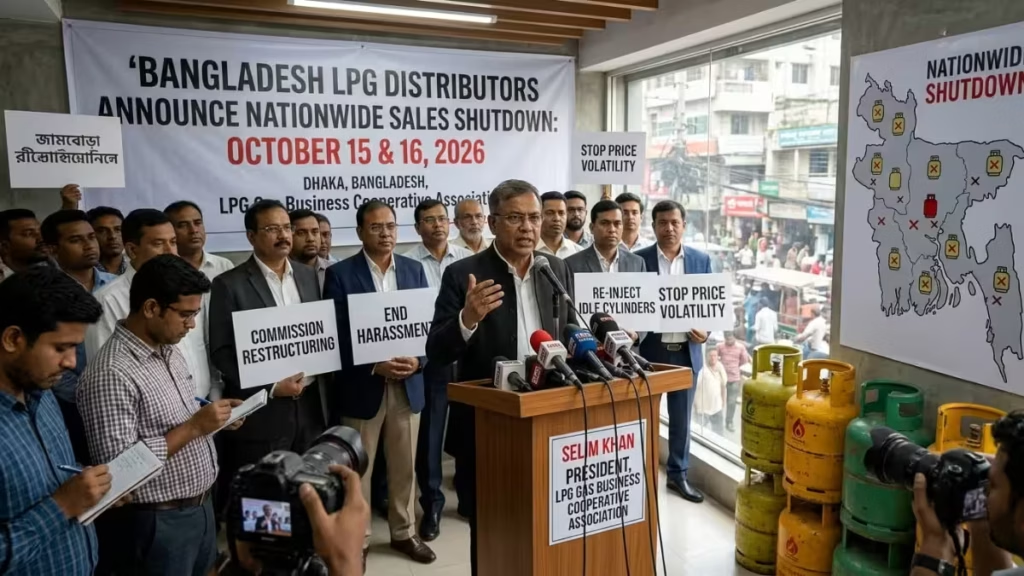
Liquefied Petroleum Gas (LPG) distributors across the country have declared a two-day nationwide LPG sales shutdown in the Bangladesh market, scheduled for October 15 and October 16. The coordinated market stoppage comes as energy traders push for distributor commission restructuring, an immediate end to administrative harassment, and the re-injection of idle gas cylinders into the commercial market. Business leaders confirmed the movement on Monday, October 12, during a press conference at the National Press Club in Dhaka.
The primary distributor coalition warned that the initial two-day market closure could quickly escalate into a broader energy disruption if state regulators and private import operators fail to resolve ongoing structural demands. “If our demands are not met after the two-day program, LPG sales will be suspended indefinitely across the country,” said Selim Khan, President of the LPG Gas Business Cooperative Association.
At the center of the dispute is a growing rift over price compliance and tariff enforcement within the domestic energy sector. Distributors claim that after the Bangladesh Energy Regulatory Commission (BERC) sets monthly retail LPG prices, private supply companies frequently alter rates at their own discretion. Traders are demanding strict regulatory oversight to prevent supply firms from changing prices arbitrarily, insisting that any required price adjustments must occur exclusively through BERC.
Simultaneously, severe foreign exchange constraints and operational shut-offs have crippled distribution networks nationwide. Several LPG supply companies have shuttered operations entirely, while others face mounting difficulties opening Letters of Credit (LC) needed to finance foreign gas imports. The resulting import bottlenecks have drastically reduced market liquidity and concentrated distribution capacity among a tiny fraction of industry players.
Market contraction has left vast amounts of distribution infrastructure sitting unusable while consumer availability tightens. “Currently, only six to seven companies remain active, leaving several hundred thousand gas cylinders sitting idle nationwide,” said Selim Khan, President of the LPG Gas Business Cooperative Association. To restore supply equilibrium, distributors are calling on the government or operational LPG companies to fill these hundreds of thousands of stagnant cylinders and channel them back to market via authorized dealers. Industry representatives argue that deploying this idle inventory would stabilize retail availability and allow consumers to purchase fuel at fair prices.
Retail distributors also voiced strong opposition to state enforcement measures, citing aggressive regulatory oversight at the shop level. The association cited mounting friction with executive magistrates and the Directorate of National Consumer Rights Protection (DNCRP), alleging unreasonable financial penalties and systemic harassment during field inspections.
High-level intervention occurred directly during the industry briefing as government energy regulators stepped in to manage the unfolding crisis. “The commission is reviewing the demands of the traders, and necessary steps will be taken shortly,” said the Chairman of the Bangladesh Energy Regulatory Commission in a direct telephone call to the association’s leadership during the briefing. Still, distributor leadership maintains that without concrete administrative adjustments before October 15, the nationwide sales halt will proceed as planned.
Editorial Note: This article was researched and drafted with AI assistance, then rigorously fact-checked, edited, and published by Miles. All content is strictly for informational and educational purposes only and does not constitute professional investment advice. Cryptocurrency and global financial markets experience severe volatility, sometimes swinging 50% or more in a single day. Invest only capital you can comfortably afford to lose, and always consult a certified financial advisor before committing funds. Read my full Disclaimer for more details.
