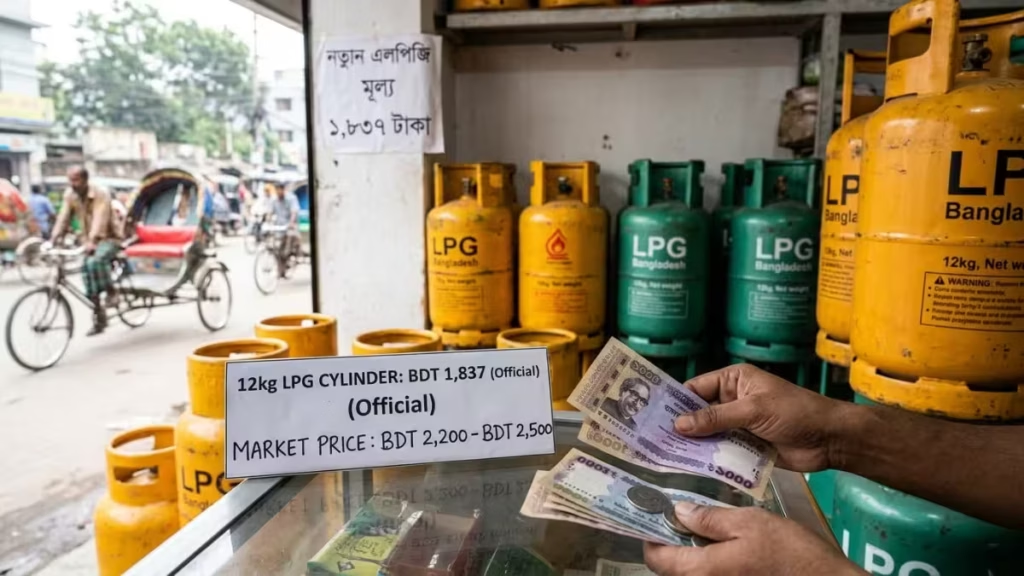
The Bangladesh Energy Regulatory Commission (BERC) has raised the consumer-level retail price of Liquefied Petroleum Gas (LPG) across the country. Under the new rate structure announced on Sunday, October 4, 2026, the price of the widely used 12kg LPG cylinder jumped by BDT 252, shifting from BDT 1,585 to BDT 1,837. The official tariff revision took effect at 6:00 PM on Sunday. BERC also raised autogas rates to BDT 84.62 per liter, up from BDT 73.09. Meanwhile, state-owned LP Gas Company cylinders remain unchanged at BDT 825 for 12.5kg, though state supplies meet less than 2% of total national demand.
Why the Price Increased
BERC officials pointed to sharply higher procurement and logistical expenses in international energy markets following regional conflicts in the Middle East. Propane and butane benchmarks set by Saudi Aramco surged for October shipments, driving per-kilogram LPG costs up to BDT 153.06 from BDT 132.12.
Higher international ocean freight rates and increased domestic transportation expenses—fueled by elevated diesel prices—further pushed up import landing costs. According to BERC, the adjustments reflect international contract price shifts that private importers must pay to maintain shipment volumes into Bangladeshi ports.
The Reality on the Ground
Despite BERC setting the official benchmark at BDT 1,837, consumers across major urban centers face far higher expenses at local retail counters. In Dhaka residential districts such as Mirpur, Uttara, and Dhanmondi, shopkeepers charge between BDT 2,200 and BDT 2,500 for a single 12kg cylinder. This creates a markup of BDT 300 to BDT 700 above the state-regulated rate.
“We go from dealer to dealer, but nobody honors the BERC rate,” said a resident of Mirpur who paid BDT 2,350 for a cylinder on Monday morning. “The shops claim they buy at inflated rates from primary distributors, leaving households to absorb the extra cost.”
Market disruptions intensified following a major technical shutdown at a floating storage and regasification unit (FSRU) off Cox’s Bazar in July 2026. The incident severely reduced national pipeline gas supply, forcing thousands of commercial outlets and residential buildings to turn to bottled LPG for daily energy needs.
Plaintext
┌────────────────────────────────────────────────────────────────────────┐
│               BANGLADESH LPG 12KG CYLINDER PRICE TRACKER               │
├───────────────────────────┬──────────────────────┬─────────────────────┤
│         MONTH             │  BERC OFFICIAL RATE  │ RETAIL MARKET RANGE │
├───────────────────────────┼──────────────────────┼─────────────────────┤
│ January 2026              │      BDT 1,253       │  BDT 1,350 - 1,450  │
│ February 2026             │      BDT 1,356       │  BDT 1,450 - 1,550  │
│ March 2026                │      BDT 1,356       │  BDT 1,420 - 1,500  │
│ April 2026                │      BDT 1,955       │  BDT 2,100 - 2,300  │
│ June 2026                 │      BDT 1,900       │  BDT 2,000 - 2,150  │
│ July 2026                 │      BDT 1,543       │  BDT 1,700 - 1,850  │
│ August 2026               │      BDT 1,613       │  BDT 1,800 - 1,950  │
│ September 2026            │      BDT 1,585       │  BDT 2,200 - 2,500  │
│ October 2026              │      BDT 1,837       │  BDT 2,200 - 2,500  │
└───────────────────────────┴──────────────────────┴─────────────────────┤
The Root Causes
Deep structural imbalances plague Bangladesh’s domestic energy network. National natural gas production and imported LNG supply currently yield around 2,600 million cubic feet per day (MMCFD), falling far short of the country’s total demand of nearly 4,000 MMCFD. This deficit forces urban households and industrial units to shift toward private bottled gas.
Supply consolidation poses another obstacle. The active pool of private LPG importers has narrowed to around six major conglomerates. Allegations of cargo withholding and artificial supply restriction frequently surface during international price shifts.
However, industry representatives defend import operations. “Our import volumes remain sufficient to meet national demand,” stated LPG Operators Association of Bangladesh (LOAB) President Mohammad Amirul Haque in comments published by Prothom Alo. “We instructed all member companies to ensure fair distribution so that dealers do not charge retail premiums above regulated tiers.”
Impact on Consumers
The steep BDT 252 price hike adds pressure on household budgets already strained by broader food and utility inflation. Roughly 10 million consumers depend on bottled gas in Bangladesh, with 80% using 12kg cylinders for daily cooking.
For middle- and lower-income families in suburban belts without pipeline connections, spending BDT 2,200 to BDT 2,500 per cylinder represents a significant portion of monthly earnings. Small food vendors and tea stalls also face rising operating expenses, forcing many to pass costs along to customers through higher food prices.
To hedge against currency devaluation and domestic utility inflation, retail investors in South Asia frequently analyze international reserves or automated savings strategies, such as tracking the Bitcoin Price or utilizing a structured DCA Calculator to diversify asset portfolios during inflationary periods.
What’s Next
State regulatory agencies are stepping up oversight to curb price gouging. BERC Chairman Jalal Ahmed stated that regulatory inspection teams are actively scrutinizing localized product stockpiling.
“The commission is reviewing market data to determine if distributors stockpiled inventory prior to the price announcement,” BERC Chairman Jalal Ahmed noted to media correspondents. “Strict action will follow against any licensee found manipulating retail availability.”
Simultaneously, energy ministry officials are reviewing long-term supply arrangements, including government-to-government agreements to import LNG and LPG directly from suppliers in North Africa, such as Algeria, to stabilize national reserves.
Frequently Asked Questions
What is the new price of a 12kg LPG cylinder in Bangladesh?
The Bangladesh Energy Regulatory Commission set the official benchmark price for a 12kg private LPG cylinder at BDT 1,837, marking a BDT 252 increase from September.
Why did LPG prices increase in October 2026?
BERC cited higher Saudi Aramco Contract Prices for propane and butane, elevated global shipping freight charges, and higher domestic distribution costs linked to diesel fuel rates.
Why are consumers still paying more than the official price?
Retailers and local dealers cite supply shortages, high transportation overheads, and distributor markups, pushing neighborhood prices to between BDT 2,200 and BDT 2,500.
Is there an LPG shortage in Bangladesh?
Importers report that total import volume remains stable, but regional bottlenecks, localized hoarding, and natural gas pipeline shortfalls have restricted retail availability.
What is the government doing to control LPG prices?
BERC and the Directorate of National Consumer Rights Protection are conducting field inspections, inspecting distributor inventories, and exploring direct government-to-government import options with alternative energy producers.
Editorial Policy & Compliance: The Market Express is committed to independent financial reporting and objective market analysis. Data cited in this report is sourced from official statements published by the Bangladesh Energy Regulatory Commission (BERC), reporting from The Daily Star, and industry analysis from The Business Standard.
Editorial Note: This article was researched and drafted with AI assistance, then rigorously fact-checked, edited, and published by Miles. All content is strictly for informational and educational purposes only and does not constitute professional investment advice. Cryptocurrency and global financial markets experience severe volatility, sometimes swinging 50% or more in a single day. Invest only capital you can comfortably afford to lose, and always consult a certified financial advisor before committing funds. Read my full Disclaimer for more details.
Firoz Ahmed is a Senior Financial & Digital Asset Analyst at The Market Express, where he covers real-time market trends, cryptocurrency price action, and macroeconomic updates. With a background in software engineering and digital publishing, he focuses on technical market structures, derivatives data, and on-chain intelligence. More